Some places do not just hold memories — they form you.
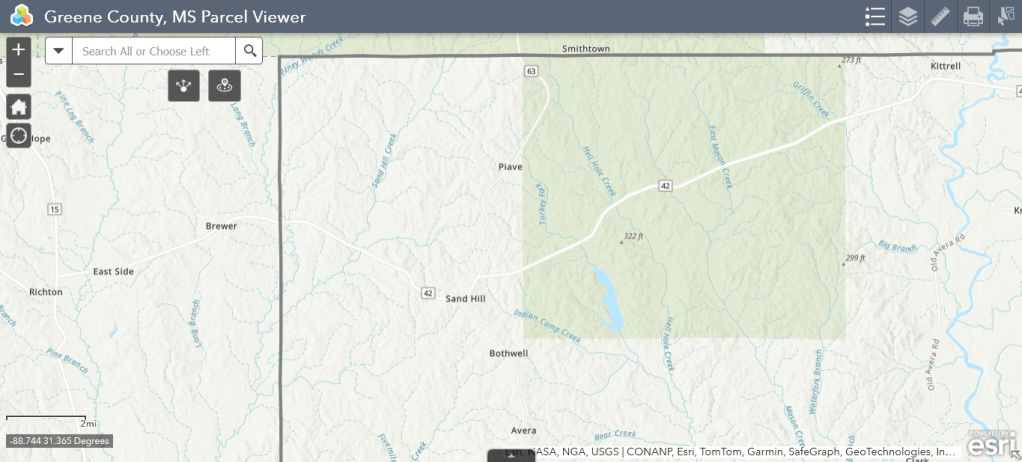
For me, one of those sacred places was our farm in northwest Greene County, Mississippi, in the 1950s. It sat on the Union to Piave Road, a narrow dirt road that ran east to west and crossed Lovewell Road on the other side of Sand Hill Creek. That road divided our world. Our farmhouse sat on one side; the fields, livestock, and much of our labor lived on the other.
It was a meager living.
And it was magnificent.
The House on Concrete Blocks
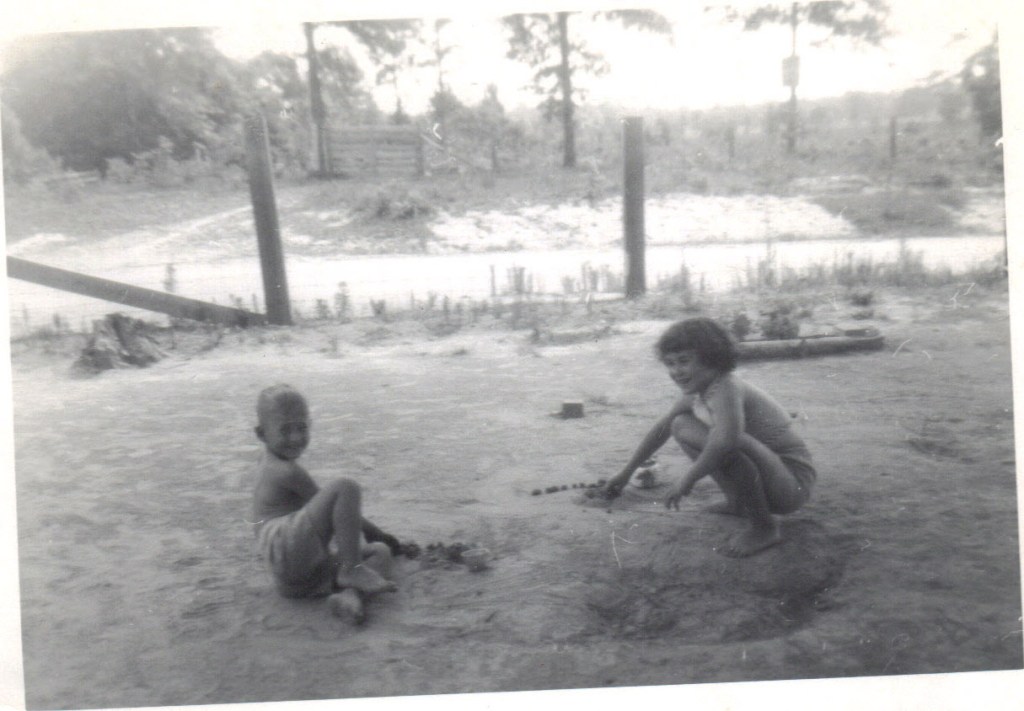
Our house was raised on concrete blocks. The front porch stretched the entire length of it — and that porch was the heart of our life. Big oak trees shaded the yard. There was no grass, just hard-packed sand and earth that turned into building material for castles when it rained.
We had no running water. The well stood in the front yard. No television. No telephone. We went to bed at dark and rose before daylight.
The house was simple:
- A door from the porch opened into Mama and Daddy’s bedroom, where the fireplace stood.
- That room connected east to the girls’ bedroom where Sue and Hilda slept.
- It also opened south into the kitchen.
- The kitchen held a wood stove, a few cabinets, and a dining table.
- A door on the east side of the kitchen led into the boys’ bedroom, where George, Ted, and I shared a double bed.
Behind the house were the chicken coops and the outhouse. Between them, I once built what I proudly called a “church floor.” East of the chicken coop stood the smokehouse.
Across the dirt road were the fields — cotton, corn, sugar cane, and watermelons. The goats, the mules, and the cow stayed there too. Down the hill was the bridge across Sand Hill Creek, where we fished, swam, and waded in summer heat.
The world felt wide and endless.
Work and Rhythm
Life followed a rhythm.
We worked the fields in the morning, came in at noon for dinner, took a nap, and then returned to work until near sundown. Supper followed. Then we gathered on the porch.
Mama cooked on the wood stove. She boiled clothes in a large cast-iron pot and hung them on the barbed-wire fence to dry until Daddy bought her a wringer washer that sat proudly on the front porch.
We went barefoot most of the year — except on Sundays for church or when we went to Shep’s Brewer’s Store or Henderson’s Store. There, Mama bought staples: sugar, flour, salt, and gas for the car. She bought 25-pound sacks of flour and let me choose the sack pattern because she would later sew shirts for me from that cloth.
Our nearest town was Richton, about eight miles away. We went there for farm supplies and occasionally for hamburgers at a greasy spoon café, which felt like dining in the city.
Porch Stories and Sweet Tea
When we were not in the fields, the front porch was our living room in spring, summer, and fall.
Neighbors lived half a mile to a mile away, but they would stop if they were walking down the road or passing by in a car. Mama would bring out sweet tea and whatever dessert she had made.
That porch is where I learned about life.
I listened to gossip. I heard stories of hardship and resilience. I absorbed the cadence of adult voices discussing crops, church, weather, and family matters. Often, while they talked, I ran barefoot through the yard with Button, our loyal Collie, or with Hole, our hound.
When Danny was around, we roamed everywhere — inventing games, hunting arrowheads and Native American relics, exploring the woods that surrounded us on all sides.
When it rained, the roadside ditches filled with clean sand, and we built castles like kings of some invisible kingdom.
Church and School
Lovewell Church stood across Sand Hill Creek, east of the house. Daddy was the pastor there for many years. That little church shaped my earliest understanding of faith, calling, and community.
I attended Union School, a few miles east of the farm, for first and second grade. It had one room for primary through sixth grade, another for seventh and eighth, and a larger community room. It was small, but it felt sufficient.
This is where it all began.
Cardinals Baseball and Christmas Oranges
Daddy loved the St. Louis Cardinals. When they had a game on the radio, sometimes we didn’t go to the fields. Those were happy days. If the Cardinals played late in San Francisco or Los Angeles, the radio stayed on until the game ended.
That radio connected us to a wider world.
At Christmas, Daddy cut a tree from our own land. We made our decorations except for the lights and the icicles. He bought large boxes of apples, oranges, and nuts — treats we rarely had any other time of year.
We did not have much.
But we had enough.
What That Farm Gave Me
Looking back, I see what that place planted in me:
- A love for stories.
- A reverence for rhythm and routine.
- A respect for hard work.
- An ability to find joy in simplicity.
- A deep awareness that community is built slowly — on porches, over sweet tea, through shared labor.
It was dirt floors and wooden stoves.
It was barefoot summers and cotton fields.
It was Button at my side and Sand Hill Creek at the bottom of the hill.
It was a meager living.
And it was ever so rich.
That farm in Greene County did more than house us.
It shaped me.
A Sacred Geography
When I think of that farm now, I realize it was more than land and lumber and fields of cotton. It was holy ground — not because it was grand, but because God was present in the ordinary. In the rhythm of work and rest. In the well water drawn by hand. In the crackle of a wood stove. In porch conversations and Cardinals games on the radio. In barefoot children building castles in sand.
That place taught me that abundance is not measured by plumbing or pavement, but by presence — the presence of family, of community, and of God woven quietly through daily life. The farm in Greene County formed my understanding of faith long before I could name it. It taught me that sacredness is often hidden in simplicity, and that the places that shape us most deeply are often the ones the world would overlook.
And even now, decades later, when I close my eyes, I can still hear the creek running, the screen door closing, and Mama’s voice calling us in for supper. Those sounds are part of my spiritual inheritance.
A Prayer of Gratitude
Gracious God,
Thank You for the places that shape us —
for dirt roads and front porches,
for wells in the yard and fields across the way.
Thank You for the rhythms of work and rest,
for stories shared at sundown,
for laughter in bare feet,
and for the quiet ways You dwell in ordinary life.
Help us to see the holy in our own backyards.
Teach us to treasure simplicity.
Remind us that abundance is found in love,
community, and Your steady presence.
May the memories that formed us
continue to guide us,
ground us,
and give us gratitude.
Amen.
 The Curious Pilgrim
Leave a comment