
5
Three places have shaped my understanding of life more than I realized at the time:
- The Communion table.
- The front porch.
- The village green in a good murder mystery.
At first glance, they seem unrelated. One is sacred. One is domestic. One is fictional entertainment.
But the older I get, the more I see they are all about the same thing:
Mystery and connection.
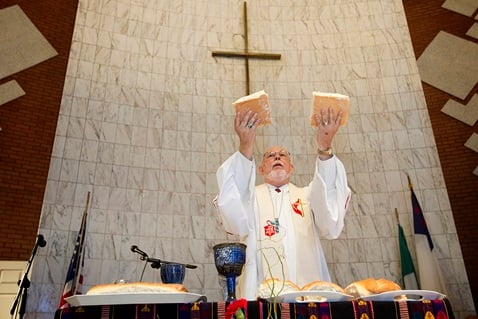
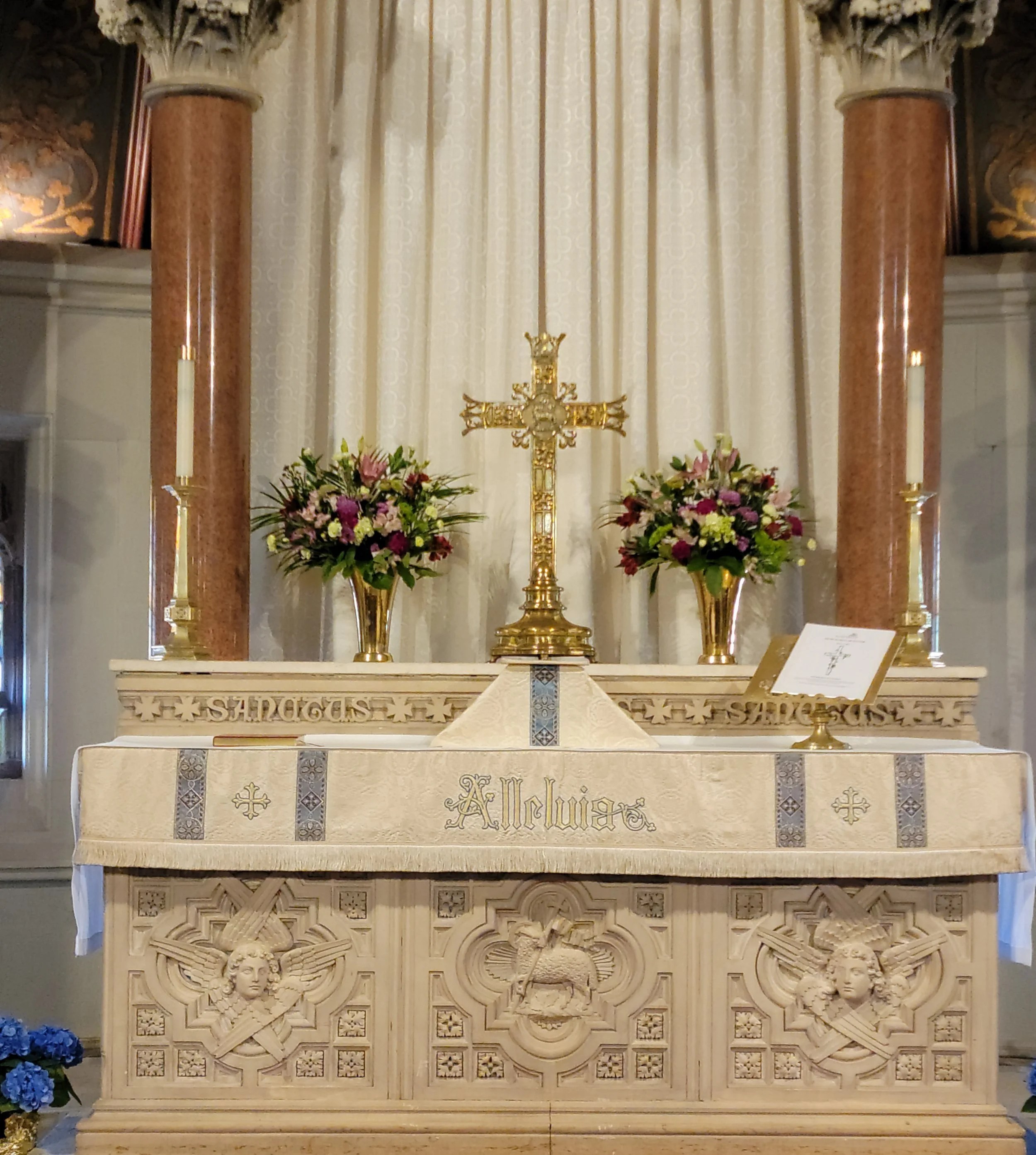
The Holy Mystery of the Table
In both the United Methodist Church and the Episcopal Church, Communion is called a Holy Mystery.
We do not fully explain it.
We do not reduce it to mechanics.
We receive it.
Bread.
Cup.
Table.
We are told:
Christ is present.
All are welcome.
We encounter God not through argument, but through participation.
The table is not a test.
It is not a doctrinal exam.
It is not a reward for perfect belief.
It is connection.
Connection between:
- Humanity and God.
- Past and present.
- Brokenness and grace.
- One another.
The table says: Belong first. Understand later.
That is mystery.
The Porch as Sacred Space
Growing up in Mississippi, the porch was our table before the table.
Neighbors came.
Family gathered.
Stories unfolded.
Disagreements happened without humiliation.
No one was screened at the steps.
You might not agree.
You might not vote alike.
You might not worship the same.
But you were offered sweet tea.
The porch, like the Communion table, says:
“You are welcome here.”
It does not demand sameness.
It invites presence.
Why I Love Murder Mysteries
I have long loved series like:
- Midsomer Murders
- Miss Marple
- Murdoch Mysteries
- Father Brown
People sometimes ask what that says about me.
Here is what I think:
A murder mystery is not really about death.
It is about restoring connection.
Something has fractured the community.
Something hidden must be revealed.
The truth must surface.
Relationships must be re-understood.
In every episode, beneath the crime, there is a deeper question:
What happened between people?
Jealousy.
Fear.
Secrets.
Power.
Shame.
Human complexity.
And when the mystery is uncovered, order is restored — not perfectly, but honestly.
Mystery stories assume:
- Humans are flawed.
- Communities are fragile.
- Truth matters.
- Connection can be repaired.
That is deeply theological.
The Bible as Story, Not Rulebook
When I was fourteen and preaching, I saw the Bible as a rulebook.
Now I see it differently.
I see it as a library of stories revealing humanity’s struggle to understand the Mystery we call God.
Abraham wandering.
Jacob wrestling.
David longing.
Prophets protesting.
Disciples misunderstanding.
Peter failing.
Paul evolving.
The Bible does not hide complexity.
It reveals it.
It is less a manual and more a testimony.
Less a weapon and more a witness.
Like a murder mystery, it pulls back the curtain on motives, fear, betrayal, redemption, and grace.
Like the porch, it invites conversation.
Like the Eucharist, it invites participation.
The Common Thread: Mystery and Belonging
The Communion table.
The front porch.
The village in a mystery drama.
The pages of Scripture.
All four teach me the same lesson:
We do not solve life.
We enter it.
We do not eliminate mystery.
We learn to live inside it.
We do not control God.
We encounter God.
The Bible, as I now understand it, is not about control.
It is about connection.
Connection between humanity and God.
Connection between one another.
Connection between past wounds and present healing.
The Eucharist says:
“Come to the table.”
The porch says:
“Sit a spell.”
The mystery says:
“Look deeper.”
A Life Lesson
Life is not a courtroom where we prove who is right.
It is a table where we learn how to belong.
It is a porch where we learn how to listen.
It is a story unfolding where motives are revealed and grace appears where we least expect it.
The Holy Mystery of Communion reminds me:
God is present.
The porch reminds me:
People matter.
The murder mystery reminds me:
Truth heals communities.
And the Bible reminds me:
God has been walking with humanity through all of it.
Not as a rulebook to master.
But as a story to inhabit.
Closing Reflection
If we truly believed the table was open,
the porch was wide,
and the story was still unfolding,
how differently would we treat one another?
Perhaps the greatest mystery is not how God works.
Perhaps it is how often we forget that we are all invited.
 The Curious Pilgrim
Leave a comment